Cleaning Out the Potting Shed Before Winter
We finally cleaned out the potting shed after years of putting it off. A little organization now makes winter easier and spring gardening a whole lot less frustrating.
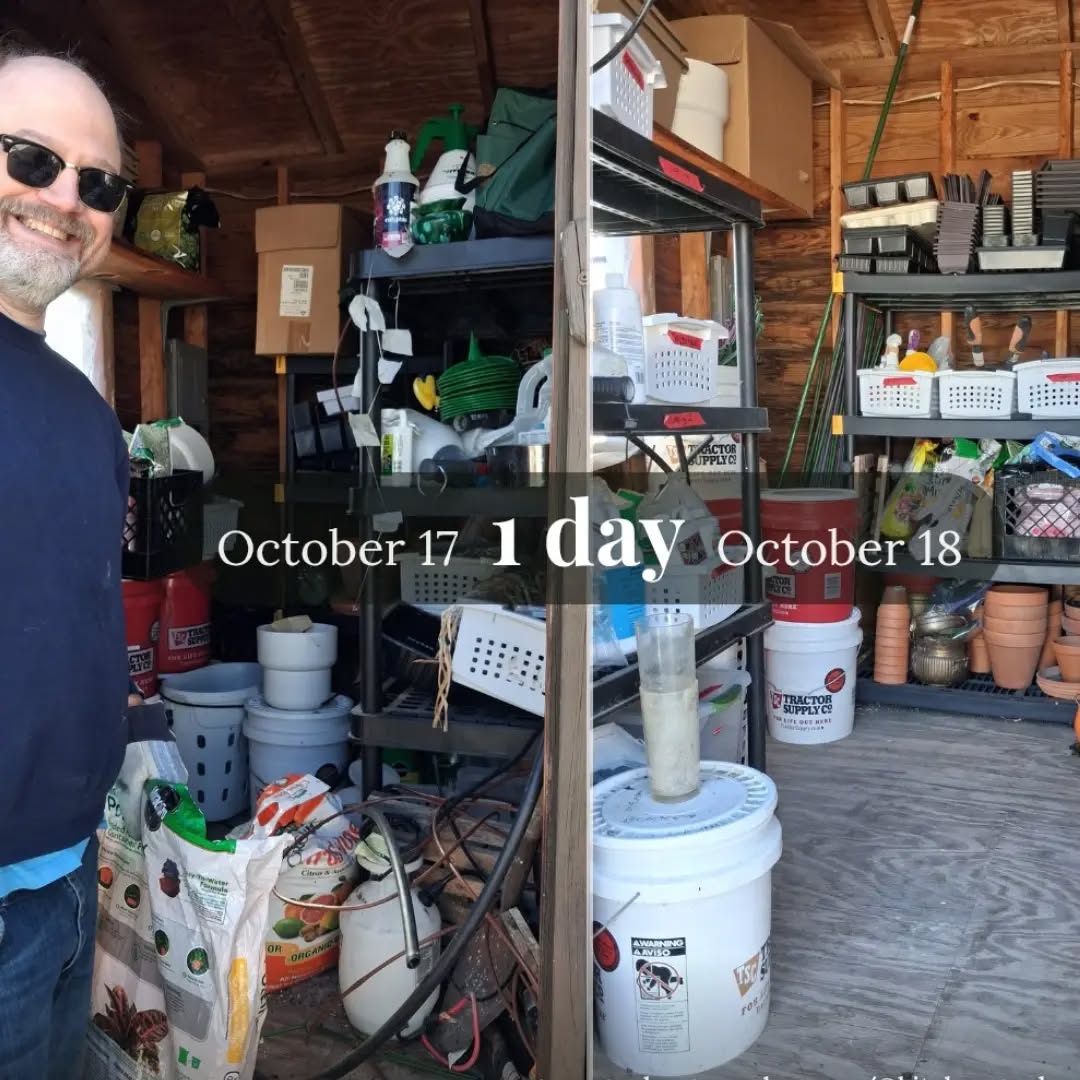
We cleaned out the potting shed this weekend. Finally.
It's been years coming. Years. And I can't tell you how good it feels to walk into that shed and actually see what we have.
October 17 and 18 were spent sorting through pots, seedling trays, buckets, hoses, bags of soil, and all the other stuff that accumulates when you garden.
If you garden long enough, you collect things. Lots of things. Some useful. Some you haven't touched in five years but keep anyway. Guilty.
I'm a chaos gardener, but there's a difference between creative chaos in the garden and not being able to find a clean pot when you need one.
Why I Clean Out the Potting Shed in Fall
Fall is a good time to tackle the jobs you've ignored all summer. The weather is cooler, the garden isn't demanding quite as much attention, and winter is coming whether we're ready or not.
A potting shed can turn into a dumping ground during the growing season. You're busy planting, transplanting, watering, and harvesting. Nobody wants to stop everything to organize a shelf.
I certainly don't.
But by October, all those little messes have accumulated. And if you leave everything until spring, you're going to be dealing with it when you'd rather be planting.
I'd much rather do the dirty work now.
What to Clean Before Winter
You don't need an elaborate organization system. You need a space where you can find things and get some work done.
Here's what I focus on:
- Seedling trays and pots: Empty them, knock out the old soil, and wash them. Scrub away debris and sanitize containers before using them for new seedlings, particularly if you've had disease problems.
- Garden tools: Remove dirt, check for rust, and sharpen anything that needs attention. Dry metal tools before storing them.
- Hoses: Drain them before freezing temperatures arrive. Disconnect hoses from outdoor faucets and store them where they won't sit in standing water.
- Potting soil: Check opened bags for insects, contamination, and deterioration. Store usable potting mix in covered containers somewhere dry. Don't reuse mix from diseased plants for starting seedlings.
- Buckets and containers: Sort through the collection. Keep what you actually use. Get rid of broken plastic and anything that's beyond saving.
- Shelves: Clear them off and put things back where they belong. Revolutionary concept, I know.
The goal isn't perfection. It's being able to walk into the shed in February and find what you need without excavating three years of gardening supplies.
Don't Forget About Freezing Temperatures
Depending on where you live, winter can be rough on gardening supplies.
Terracotta pots can crack when water trapped inside freezes. Empty them, let them dry, and store them somewhere protected.
Plastic pots are more forgiving, but freezing temperatures and sunlight eventually make them brittle. Keeping them out of the weather helps them last longer.
Drain watering cans, sprayers, and irrigation equipment. Water expands when it freezes, and cracked equipment is an aggravating expense that can usually be avoided.
If you keep liquid fertilizers or other garden products in the shed, check their storage instructions. Some need protection from freezing.
And please don't leave garden chemicals sitting around where children or animals can get into them. Keep everything labeled and stored securely.
Here in the South, we can have beautiful gardening weather in October and a hard freeze a few weeks later. Don't let a warm afternoon fool you.
Spring Gardening Starts With Fall Cleanup
One thing I've learned from years of gardening is that spring comes fast.
You think you have plenty of time. Then suddenly you're starting seeds, preparing beds, and trying to figure out where you put everything last year.
A clean potting shed makes all of that easier.
Once your shelves are organized, take inventory of your seed-starting supplies. Check your trays, labels, containers, and potting mix. Figure out what needs replacing before everybody starts buying gardening supplies in spring.
This is a good time to look through your seed collection too. Store seeds somewhere cool and dry, preferably indoors where temperature fluctuations are less extreme. Check the dates on older packets and make a note of anything you need to replace.
I plant a lot by intuition. Always have. I like the artistic side of gardening, and I don't believe every plant needs a rigid plan.
But I do need to know what seeds I have and where my supplies are.
There's only so much chaos a person needs.
A Clean Shed Helps Keep Garden Problems Under Control
Cleaning isn't just about making things look better.
Old plant debris and dirty containers can harbor plant pathogens and insects. Removing that material reduces the chances of carrying problems into your next growing season.
Pay attention to old soil and plant debris tucked into corners. Dispose of diseased material appropriately rather than mixing it into clean potting supplies.
Check for signs of rodents too. Seeds, sheltered corners, and stored materials can attract mice. Store seeds in sealed containers and avoid leaving food sources accessible.
You don't need to sterilize the entire building. Just clean up the obvious mess and keep your growing supplies in decent condition.
Simple maintenance goes a long way.
Make the Potting Shed Work for You
I like a garden space that functions without looking like a laboratory.
Keep the things you use most often within easy reach. Seedling trays together. Pots sorted by size. Hand tools somewhere you can grab them.
Store heavy bags and buckets on sturdy lower shelves. Keep frequently used supplies off the floor when possible.
And leave yourself some actual workspace.
A potting shed should be somewhere you can start seeds, transplant seedlings, and prepare for planting. Not just a storage building you have to fight your way through.
You don't need expensive shelving or matching containers. Reuse what you have. A few sturdy shelves and some common sense will get you pretty far.
I'm not buying a bunch of cute storage containers just to make the shed look good in photographs. Whatever. I'd rather spend that money on plants.
One Less Job Waiting for Spring
Getting the potting shed cleaned out was one of those projects that had been hanging over us for years.
We finally did it this weekend, and it feels good.
There's still plenty to do before winter. There always is when you have a garden. Beds need attention, irrigation needs checking, and anything sensitive to freezing temperatures needs protection.
But the shed is done.
And when it's time to start seeds again, I won't have to spend half the morning looking for a clean tray.
That's a win in my book.
Want a plan that matches your zip code?
Get your free planting calendar →