Growing Lettuce Through Fall Frost and Freezing Nights
My fall lettuce looks fantastic, but 26°F is coming Friday night. Here's how I protect lettuce from a hard freeze without making frost protection more complicated than it needs to be.
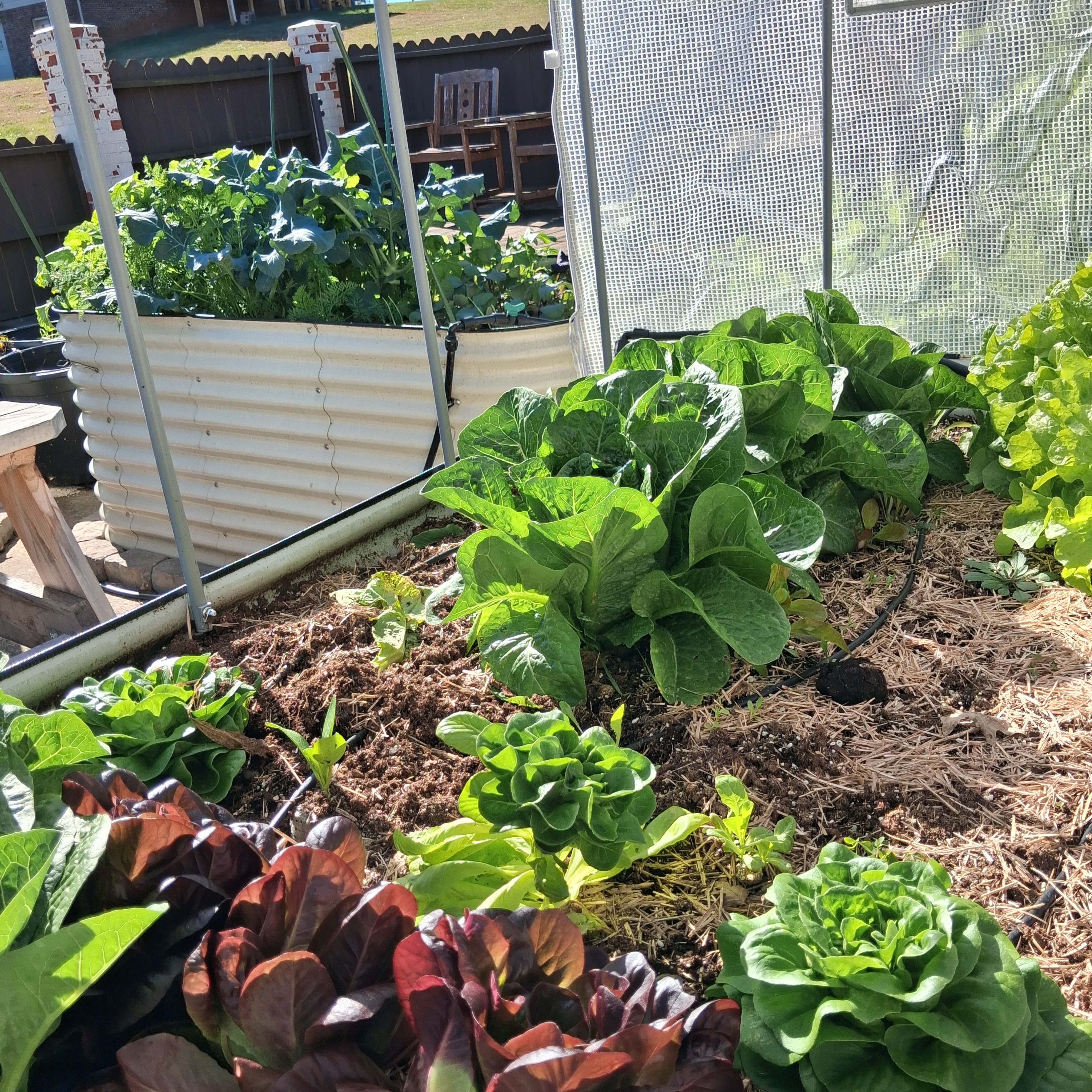
My lettuce has had a great fall. Big, healthy leaves, gorgeous color, and plenty to harvest. Exactly what I want from a fall kitchen garden.
And Friday night it's supposed to drop to 26°F.
Well, shit.
I'm not particularly worried. I've got heavy frost cloth, and I know what to do with it. The trick is getting it on before the temperature drops and remembering to take it off when the sun comes back out.
That second part gets me sometimes.
How Cold Can Lettuce Actually Handle?
Lettuce is a cool-season crop. It prefers temperatures between 45°F and 65°F, which makes fall one of my favorite times to grow it.
A light frost? Usually no big deal. Established lettuce can tolerate temperatures around 28°F to 32°F for short periods, depending on the variety, growing conditions, and how accustomed the plants are to cold weather.
A hard freeze is another story.
Once temperatures drop into the mid-20s, lettuce leaves can suffer serious damage. Water inside the plant's cells freezes, damaging the tissue. When everything thaws, those beautiful leaves can turn into a limp, translucent mess.
Not exactly what I had planned for my salads.
Some varieties handle cold better than others. Romaine and certain loose-leaf varieties can be surprisingly resilient. Young plants and tender new growth tend to be more vulnerable.
The duration of the freeze matters, too. A quick dip to 26°F isn't the same as eight hours at that temperature.
Protecting Lettuce From a Hard Freeze
For Friday night's forecast, I'm using heavy frost cloth.
Frost cloth is one of those garden supplies I think every cool-season gardener should own. It's relatively inexpensive, reusable, and doesn't require building some elaborate contraption.
The fabric traps some of the warmth rising from the soil and reduces heat loss around the plants. Depending on its weight and how it's installed, frost cloth can provide several degrees of protection.
The heavier material offers more insulation than lightweight row cover, but not every product provides the same protection. Check the manufacturer's temperature rating before trusting it with a hard freeze.
Here's my routine:
- Cover before dark. I want the cloth in place before the garden starts losing the day's stored heat. Waiting until everything is already freezing defeats part of the purpose.
- Cover the entire planting area. I extend the fabric beyond the lettuce and secure the edges close to the ground. Gaps let cold air circulate underneath.
- Weigh down the edges. This particular bed catches the wind. Loose frost cloth flapping around at 2 a.m. isn't doing anybody any favors. I use weights or garden staples to keep it secure.
- Keep the fabric from crushing tender plants. Low hoops or supports help protect larger lettuce leaves and create an insulating pocket of air.
- Check the temperature the next morning. I remove the cloth once temperatures are safely above freezing, usually mid-morning, so the plants get light and fresh air.
That last step depends on the weather. On a cloudy, cold day, the cover might stay on longer. Under strong sunshine, temperatures beneath the fabric can climb faster than you'd expect.
For two consecutive freezing nights, I'll cover the lettuce again before the second evening. No sense doing all this work Friday and losing everything Saturday.
The Raised Beds Make a Difference
My kitchen garden has several raised beds filled with cool-season vegetables. Lettuce shares the space with bok choy, broccoli, kale, chard, and carrots.
I love growing these crops together. They have different textures, colors, and growth habits, and the whole garden looks good enough to eat. Literally.
Raised beds drain well, which is great for winter gardening. The downside is their exposed sides can lose heat faster than the surrounding ground during cold weather.
That's one reason I pay attention to the forecast instead of assuming everything will be fine.
The soil matters, too. Soil with adequate water holds and releases heat differently from bone-dry soil. I check the beds before a freeze and water earlier in the day if the soil is dry and the plants need it. I don't soak everything right before temperatures plummet.
My drip irrigation makes that part easy. During freezing weather, I keep the irrigation system off and protect any exposed components that could freeze.
I'm a chaos gardener, but I do have standards. Especially when my dinner is involved.
What About the Other Fall Vegetables?
Not everything in the garden needs the same treatment.
Kale can tolerate temperatures considerably colder than lettuce. Established plants often survive temperatures in the teens, depending on the variety and growing conditions.
Broccoli handles frost pretty well, though developing heads can suffer damage during a hard freeze.
Bok choy is another crop I watch closely. Its thick, tender stems can develop cold damage, particularly during prolonged freezing temperatures.
Chard tolerates light frost, but extended freezing weather can damage its leaves. Established roots sometimes survive and produce new growth when temperatures improve.
Carrots are a different situation. Their roots are insulated by the soil, and a layer of mulch can help protect them during colder weather. Their tops may suffer damage long before the roots do.
I don't automatically cover every vegetable when the forecast mentions frost. I look at what's growing, how cold it's supposed to get, and how long the cold will last.
No need to turn the whole garden into a fabric-covered circus.
Frost Cloth Isn't Magic
I see so many gardeners assume frost cloth guarantees protection at whatever temperature appears on the package.
It doesn't work that way.
Wind, humidity, soil temperature, cloud cover, and the duration of the freeze all affect how much protection you actually get.
A heavy cover rated for several degrees of frost protection may be enough for a 26°F night when the soil is still relatively warm. That same fabric may struggle during several consecutive days of freezing weather.
If the forecast gets colder, I'll add another layer or use a low tunnel with additional protection. I keep the layers supported so the lettuce isn't flattened under the extra weight.
Never put ordinary plastic directly against lettuce leaves during freezing weather. Contact points can become damaged, and plastic can trap excessive heat when the sun comes out. If I use plastic over a tunnel, it stays above the plants and gets ventilated when temperatures rise.
And if a freeze damages some leaves? I wait until everything thaws before deciding what's salvageable. Firm, healthy leaves may still be harvestable. Translucent, slimy, or decomposing leaves go into the compost.
Sometimes the plants recover and push out new growth. Sometimes they're done. That's gardening.
The Part I Didn't Have to Remember
Here's what made this particular freeze preparation easier.
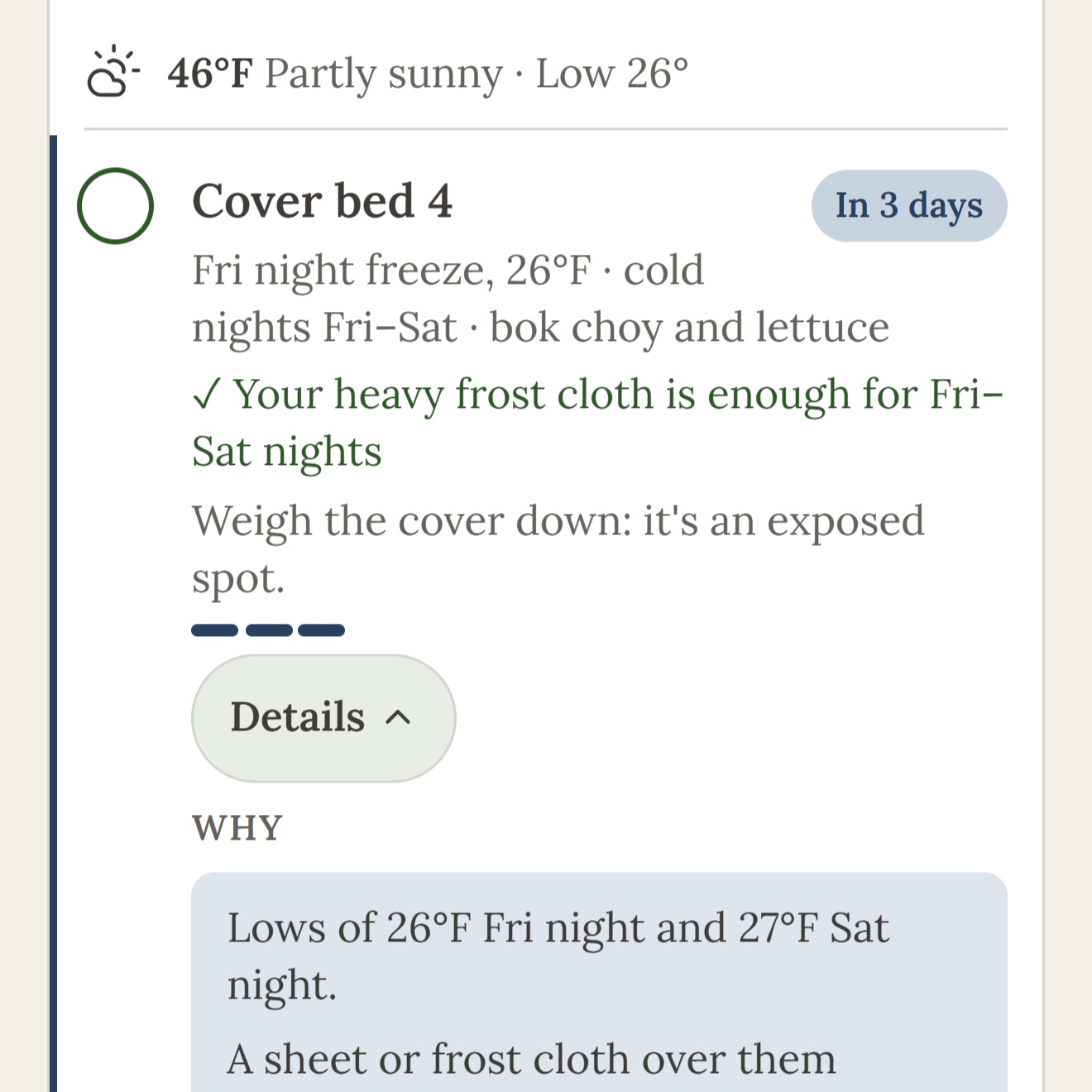
Grow flagged the approaching cold three days before it arrived. The reminder identified the garden bed, named the lettuce and bok choy growing there, and told me the heavy frost cloth I already own should provide enough protection for the two forecast cold nights.
I didn't have to check every bed against the forecast or remember which supplies I had available.
That's the kind of garden planning I actually find useful.
I plant by feel. I move things around. Sometimes I put something in a bed simply on account of how I think it'll look next to another plant. My garden is part food production, part art project.
But keeping track of everything? Not my favorite activity.
Weather reminders tied to what's actually growing in a particular bed make sense to me. A generic frost warning doesn't tell me whether I need to protect lettuce, harvest basil, or leave the kale alone.
Grow does that work using my garden information and the local forecast. It's part of what I'm building with Garden Gameplan, and this is exactly the sort of everyday problem I want it to solve.
The reminder is shown in the second photo.
Keeping Fall Lettuce Growing Longer
Fall lettuce is worth protecting. Cool temperatures slow its growth, but they can produce tender leaves with excellent flavor. I actually prefer fall lettuce to a lot of what I grow in spring.
Spring can turn hot in a hurry here in the South. One week the lettuce looks wonderful, and the next it's bolting and tasting bitter.
Fall gives me a longer window for harvesting, particularly when I protect plants during occasional cold snaps.
I harvest outer leaves from established plants and leave the centers growing. That gives me repeated harvests without pulling the entire plant.
As daylight decreases and temperatures drop, growth slows considerably. Don't expect lettuce to replace harvested leaves at the same pace it did earlier in the season.
I avoid heavy fertilizing during cold weather. Pushing tender new growth right before a freeze isn't particularly helpful. Healthy soil, steady watering when needed, and appropriate cold protection do most of the work.
If you're gardening in a colder region, you'll need to adjust your approach. A lightweight cover might be plenty for occasional Southern frosts, but gardeners dealing with prolonged freezing temperatures may need a properly constructed cold frame or low tunnel. In very cold climates, lettuce growth can nearly stop during the darkest weeks of winter.
Your local forecast matters more than a generic planting calendar.
A Little Preparation Beats Losing the Harvest
Friday afternoon, I'll get the heavy frost cloth out, cover the beds, and weigh everything down before sunset.
Saturday morning, I'll check the temperature and uncover the lettuce when conditions are right. Then I'll do it again for the second cold night.
Not complicated. Just a little attention at the right time.
I like having fresh lettuce growing a few steps from my kitchen. Grocery store lettuce is expensive, and half the time it's already looking tired when I buy it. I'm picky about my produce, and growing my own means I get to harvest what I want when I want it.
A couple of nights at 26°F aren't going to make me give that up without a fight.
The goal isn't to control the weather. It's to pay attention, protect what needs protecting, and keep harvesting for as long as the garden will let me.
Want a plan that matches your zip code?
Get your free planting calendar →