Growing Radishes in Tennessee Without All the Guesswork
Radishes are easy to grow, but knowing when to water, protect, and harvest them makes a difference. Here's how I keep track without turning gardening into a second job.
I have a confession. I'm a chaos gardener who likes technology. Those two things aren't mutually exclusive.
I plant by feel. I move things around. Sometimes I buy seeds just for the hell of it and figure out where they're going later. But I still need to know when to water, when to protect my plants, and when something is ready to eat.
And I don't particularly enjoy looking up the same information seventeen times.
That's what got me thinking about seed packets. We have all this information printed on a tiny envelope, yet somehow we're still Googling things three weeks after planting.
Why can't we just take a picture of the packet and have something keep track of the rest?
Well. We can.
Growing Radishes in Tennessee
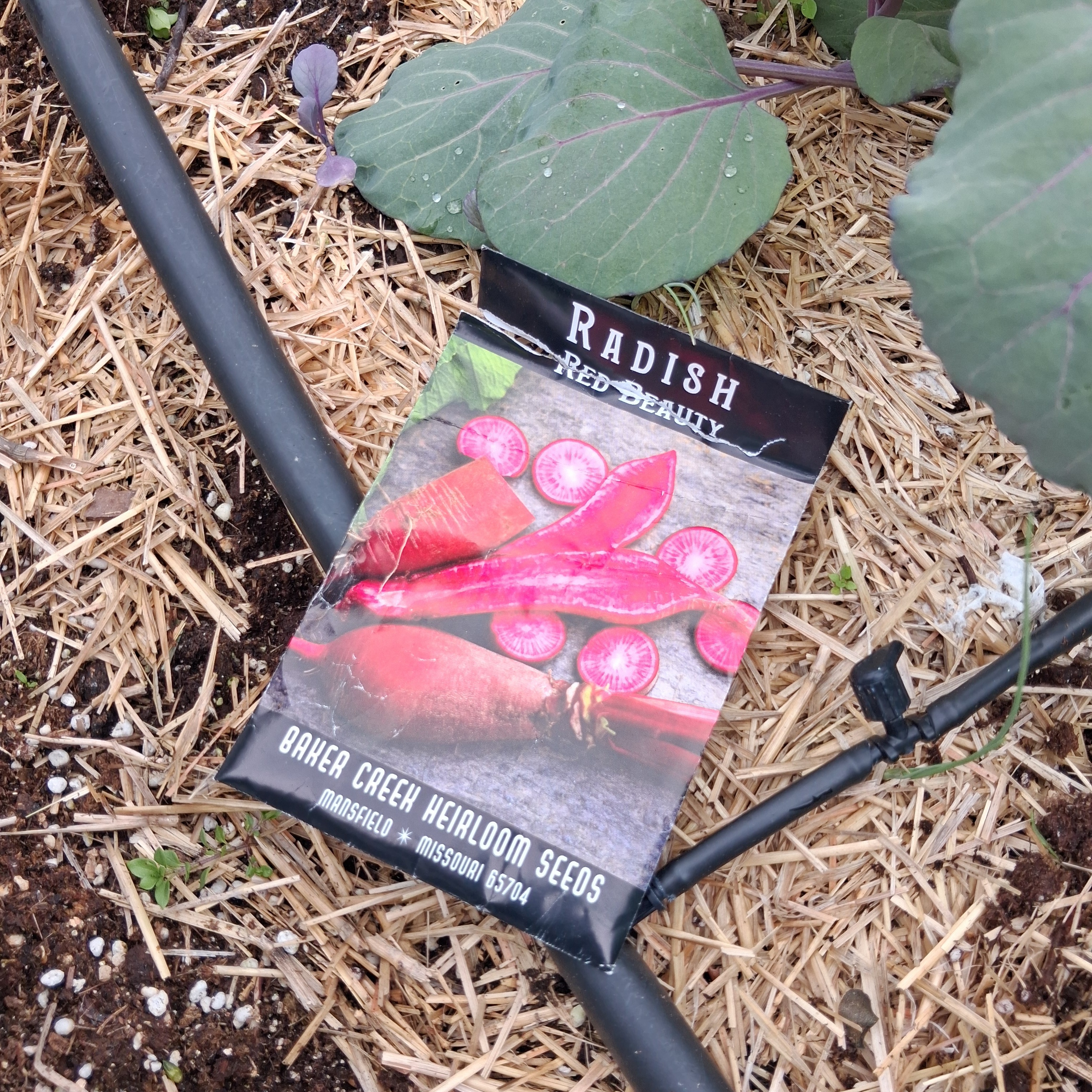
These are Red Beauty radishes growing in one of my garden beds. Nothing particularly complicated happening here. Mulch, drip irrigation, and a packet of seeds.
Radishes are one of my favorite crops for demonstrating how much gardening information changes from week to week.
They're fast. Really fast. Many varieties are ready in 25 to 35 days, depending on the weather and growing conditions.
That sounds simple until you realize how much can happen in 30 days.
You can forget to water. Temperatures can jump 20 degrees. Flea beetles can discover your seedlings. Your radishes can go from perfect to woody before you get around to harvesting them.
Ask me how I know.
When to Plant Radishes in Tennessee
Radishes prefer cool weather. Here in Tennessee, that gives us two good planting windows.
Spring planting usually starts in late February or March, depending on soil conditions and where you live. Fall planting can begin in September and continue into October in many parts of the state.
November planting is possible in some protected gardens, but growth slows considerably as daylight decreases. A radish planted in September isn't going to behave like one planted in November.
That's one reason I pay attention to actual growing conditions instead of treating the date on a seed packet like gospel.
For spring crops, I plant radishes about four to six weeks before our average last frost. They tolerate light freezes, though young seedlings appreciate protection during a hard freeze.
For fall crops, I work backward from our first expected frost and leave extra growing time for shorter days.
If you're gardening farther south, your planting windows may extend into winter. Farther north, you'll probably need to start your fall crops earlier.
Your local extension office is a good resource for regional frost dates.
Planting Radishes Without Making It Complicated
Radishes are direct-sown. No seed trays. No transplanting. Just put the seeds where you want them to grow.
I loosen the top few inches of soil, remove any large debris, and plant seeds about half an inch deep.
Space them roughly an inch apart to start. Thin seedlings to about two inches apart once they're growing well. Larger varieties need more room, so check the packet.
Don't skip thinning. Crowded radishes frequently produce beautiful leaves and disappointing roots.
I prefer loose soil with plenty of organic matter. Heavy, compacted clay can restrict root development, which is relevant for a whole lot of us gardening in Tennessee.
If your soil is particularly dense, work finished compost into the bed before planting. Raised beds can make this easier.
Skip heavy applications of nitrogen fertilizer. You'll get plenty of leaves without much happening underground.
How Often Should You Water Radishes?
This is where people get into trouble.
Radishes grow quickly, and inconsistent watering can affect their texture and flavor. Dry conditions can make them excessively pungent or woody. Big swings in water availability can contribute to splitting.
I use drip irrigation in my beds. You can see the tubing running beside the seedlings in the photo.
Drip irrigation delivers water directly to the soil instead of spraying everything from above. It saves me time and reduces water waste.
But having drip irrigation doesn't mean I never check the soil.
Stick your finger about an inch into the ground. If the soil feels dry at that depth, it's probably time to water. If it's still damp, wait.
Seedlings need consistent surface hydration during germination. Once established, radishes benefit from steady watering through root development.
Mulch helps regulate soil temperature and reduces evaporation. Just keep heavy mulch away from the emerging seedlings so they can reach the surface.
And no, there isn't one watering schedule that works for every garden.
A raised bed in full sun dries differently from an in-ground bed with afternoon shade. Rainfall, wind, soil composition, and temperature all matter.
When Do Radishes Need Protection?
Radishes belong to the brassica family, along with cabbage, broccoli, and kale.
Unfortunately, several insects find this entire family delicious.
Flea beetles are a common problem. They chew tiny holes in leaves, sometimes making seedlings look like somebody attacked them with a miniature shotgun.
Established plants can tolerate some feeding damage. Tiny seedlings are more vulnerable.
Lightweight insect netting installed immediately after planting can help prevent damage. Secure the edges so insects can't crawl underneath.
Cabbage worms and aphids can show up too. Check the undersides of leaves during your daily garden walkthrough.
I don't automatically reach for a spray every time I see an insect. A few holes in the leaves aren't necessarily a problem.
Healthy soil, crop rotation, and a garden with plenty of beneficial insects do a lot of the work.
Cold protection is another consideration.
Radishes tolerate cool temperatures, but prolonged hard freezes can damage exposed roots and foliage. Row covers can extend your growing season, particularly during fall and winter.
Remove or vent heavier covers during unexpectedly warm weather. Plants can overheat under protection on sunny days.
Knowing When to Harvest Radishes
Here's the part that trips people up.
The seed packet might say 28 days to maturity. That's an estimate, not an appointment.
Cool temperatures and shorter days slow growth. Warm weather can accelerate development and push radishes past their prime.
Start checking roots near the maturity date printed on your packet.
Gently brush soil away from the top of a radish. Many round varieties are ready when the root reaches approximately one inch across, though mature size varies by variety.
If you're unsure, pull one.
Seriously. Pull a radish and look at it.
If it's small, give the others more time. If it's the right size and tastes good, start harvesting.
Don't leave mature radishes sitting in the ground indefinitely. They can become pithy, fibrous, and unpleasantly hot.
And grocery store radishes are frequently disappointing enough already. I grow my own for a reason.
What If Your Radishes Aren't Growing Properly?
Radishes are easy, but they're not immune to problems.
Lots of leaves and tiny roots? Check your spacing, sunlight, and fertilizer. Crowding and excessive nitrogen can interfere with good root development.
Roots splitting? Irregular watering or delayed harvesting may be responsible. Keep soil hydration consistent and harvest at the appropriate size.
Tiny holes in the leaves? Look for flea beetles. Fine insect netting is often more practical than repeatedly treating the plants.
Roots taste extremely hot? Heat, water stress, and leaving radishes in the ground too long can contribute to stronger flavors.
Seeds aren't germinating? Check soil temperature, planting depth, and surface dryness. Radish seeds germinate best in moderately cool soil, roughly 55 to 75 degrees Fahrenheit. They can germinate outside that range, but extreme temperatures create problems.
And sometimes a planting just fails. Whatever. Plant another row.
That's one advantage of a crop with such a short growing season.
Why I Want My Seed Packets to Do More
I love seed packets. I love looking through seed catalogs. I love finding some obscure vegetable I've never grown and deciding it needs a place in my garden.
What I don't love is trying to remember everything about every plant I've put in the ground.
A seed packet tells you how deep to plant, how far apart to space seeds, and approximately how long until harvest.
It doesn't follow you around reminding you to check for insects or telling you that your radishes should be getting close to harvest size.
And it certainly doesn't account for every cold snap or unusually hot week in Tennessee.
That's the thinking behind Garden Gameplan.
Take a photo of your seed packet, identify what you're growing, and use that information to help organize your garden tasks.
Watering, protection, harvest timing, and troubleshooting become things you can track instead of trying to keep everything in your head.
You still have to pay attention to your actual garden. No technology can tell you exactly what's happening in your soil without observations and good information.
But having a starting point beats repeatedly searching the interwebs for the same damn answers.
Keep Your Garden Close and Pay Attention
One of my biggest recommendations is to keep your kitchen garden somewhere you'll see it every day.
Gardens need a daily walkthrough.
Not an elaborate inspection with a clipboard. Just walk through, look at the plants, touch the soil, and notice what's changed.
With radishes, those little observations make a difference. One day you're looking at seedlings. A few weeks later, you're pulling vegetables for dinner.
I like to eat, and freshly harvested radishes are excellent sliced thin with butter and flaky salt. The greens are edible too. Young, healthy leaves can go into salads or be sautéed with garlic.
For a continuous harvest, sow another small batch of radish seeds every week or two during suitable cool weather. I prefer that to planting an enormous row and suddenly having fifty radishes ready on the same Tuesday.
After harvesting, remove any diseased plant material and add finished compost before replanting if your soil needs it. Rotate brassica crops between beds when space permits, particularly if you've had recurring pest or disease problems.
Keep a record of what you planted and when. It doesn't need to be complicated.
I'm still going to garden by instinct. I like the artistic side of putting plants together and seeing what happens.
But I have zero interest in making gardening harder than it needs to be.
Take the picture. Track the plants. Walk through the garden. Eat what you grow.
That's a pretty good system.
Want a plan that matches your zip code?
Get your free planting calendar →