Keeping My Kitchen Garden Going in the Cold
The view from my kitchen sink in late November. A little protection from the cold can stretch your growing season and keep fresh food coming into the kitchen.
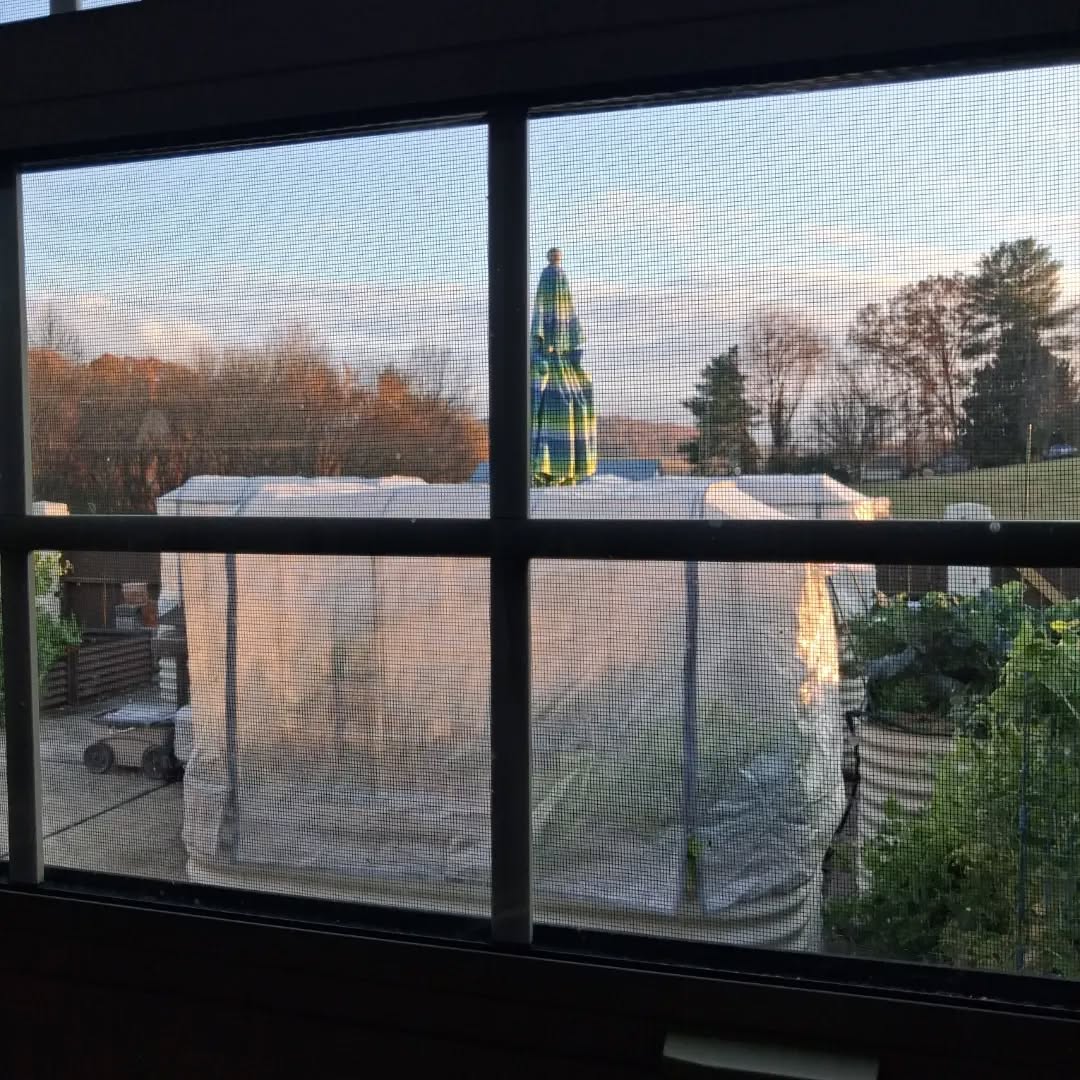
This is the view from my kitchen sink in late November. The trees are mostly bare, the garden is covered, and I'm not quite ready to give up on growing food outside.
I abhor the cold. Some garden plants handle it considerably better than I do.
Growing food through the colder months
You don't have to shut down your entire kitchen garden at the first sign of frost. Some vegetables tolerate freezing temperatures quite well. Others need protection as soon as nighttime temperatures start dropping.
The trick is knowing what you're growing and how much cold it can tolerate. Cool-season vegetables can often survive temperatures that would kill summer vegetables overnight.
Growth slows considerably this time of year. Shorter days and colder soil mean you're not going to get the same production you had in September. Think of cold-weather gardening as extending your harvest rather than expecting a whole new garden to grow in December.
Protecting your garden from frost
You don't need an expensive greenhouse to squeeze a few more weeks out of your garden. Frost cloth, garden hoops, and some inexpensive clamps can get you pretty far.
- Cover your plants before the sun goes down to trap some of the heat stored in the soil.
- Secure the edges of your covers so the wind doesn't lift them.
- Use hoops or another support to keep heavy covers from crushing your plants.
- Remove blankets and ventilate enclosed covers on warm, sunny days.
- Check the soil before watering. Plants use less water when temperatures drop and growth slows.
Old sheets can work for a light frost. Actual frost cloth is easier to manage if you're covering plants regularly. Neither will offer unlimited protection during a prolonged hard freeze.
Container gardens need a little extra attention. Roots in pots are more exposed to freezing temperatures than roots in the ground. Moving containers closer to the house or insulating the pots can help.
Keep the garden close to your kitchen
There's something to be said for being able to look at your garden from the kitchen sink. You can see when a cover has blown loose or something needs attention without trekking across the yard in the freezing cold.
Gardens need a daily walkthrough! That doesn't change in November. It just gets a little less pleasant for those of us who would rather be warm.
Harvest what you can before a hard freeze. Leave healthy, cold-tolerant plants in place if your weather permits. Pull anything that's turned mushy or started rotting so it doesn't sit under the covers all winter.
And don't get hung up on the calendar. Late November looks very different in northern and southern gardens. Your local forecast and the cold tolerance of your plants are better guides than an arbitrary date.
The particular plants aren't clear enough in this photo to identify, and cold protection needs vary by crop. These are basic practices for extending the growing season rather than instructions for one particular vegetable.
I like to eat fresh food from my garden. Grocery store produce in the middle of winter leaves a lot to be desired. If a bit of frost cloth and a few minutes outside can keep something growing that I can bring into the kitchen, I'm all for it.
Want a plan that matches your zip code?
Get your free planting calendar →