Winter squash planting guide for the South
My winter squash got almost no attention during a hot, dry summer and still gave us a bumper crop. Sometimes the garden really does carry itself.
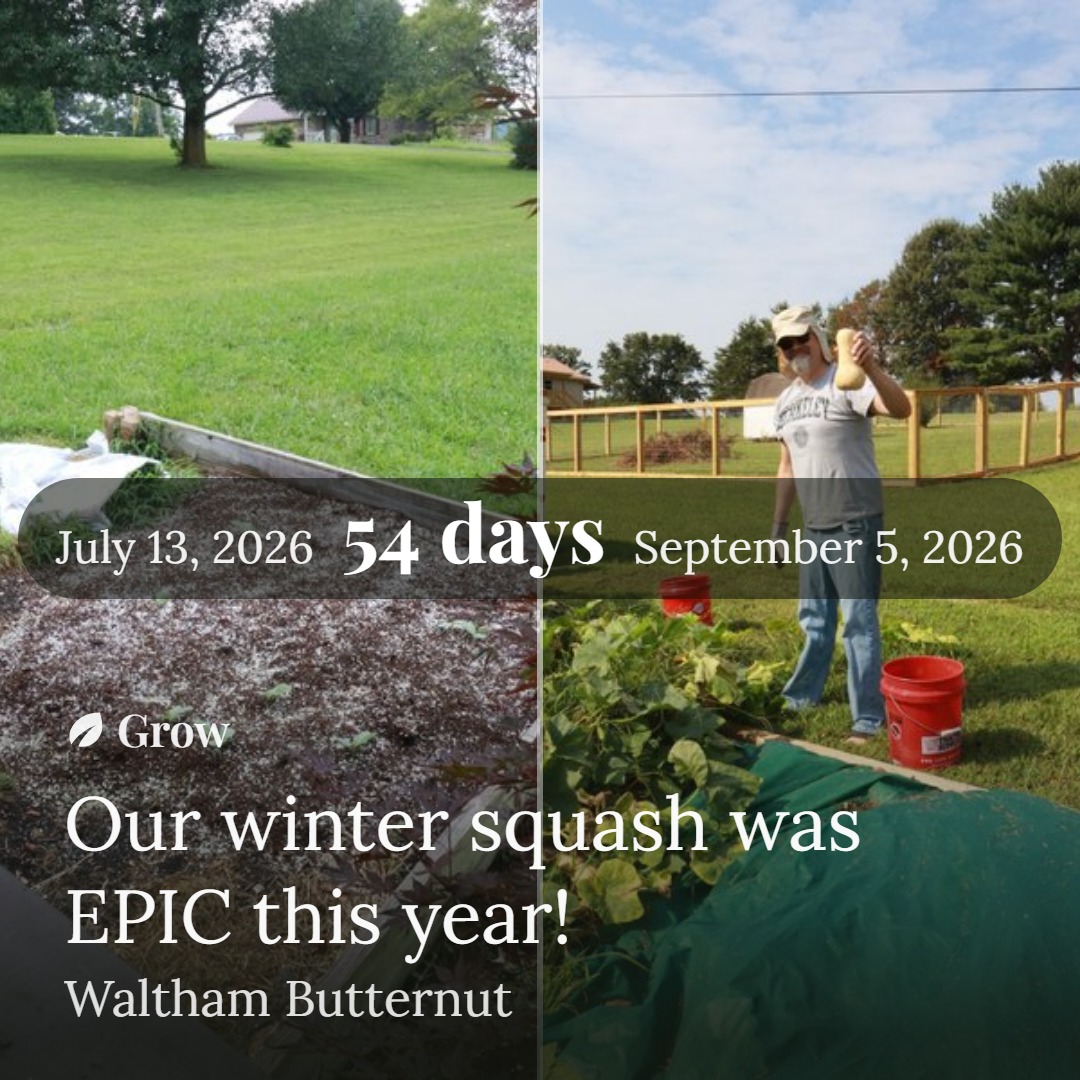
This year's winter squash was epic. And I did almost nothing to earn it.
It was a crazy summer, we had a drought, and I just couldn't do one more garden chore. I threw seeds out before one of our rare stretches of rain and left them alone. No heroic watering schedule. No elaborate squash regimen. Whatever. They grew.
The Waltham butternut went from vines in July to a pile of squash by September. That's one reason I love winter squash. Once established, those sprawling vines can cover soil, shade their own root zone, and make surprisingly good use of summer rain.
Planting winter squash in the South
Winter squash needs warm soil and a long growing season. In the South, sow after frost when the soil has warmed, or plant later for a fall harvest if your frost dates leave enough time for the variety to mature. Check the days to maturity on your seed packet and count backward from your average first fall frost. The interwebs help with local frost dates.
Give the vines room. Seriously. A tiny seedling can turn into a plant intent on annexing the yard. I am a chaos gardener, so I don't mind vines wandering through open spaces, but I do try to keep them from swallowing paths and smaller plants.
Seeds can go directly into prepared soil about an inch deep. Water them in if rain isn't coming. Once seedlings are growing strongly, a layer of compost or mulch helps the soil hold water and keeps bare ground from baking in Southern heat.
My neglect this year isn't a prescription to skip irrigation. Young plants need water to establish, and prolonged drought can reduce fruit set or fruit size. Established squash has a much larger root system and can sometimes tolerate dry periods better than we give it credit for. This particular planting got lucky with timing, soil, and the rain we did receive.
What I watch as harvest gets close
Winter squash isn't harvested like summer squash. Leave the fruit on the vine until it's mature. For butternut squash, I look for the rind to turn a solid tan and become hard enough that a fingernail doesn't easily puncture it. The stem starts getting dry and corky too.
Cut the squash rather than yanking it from the vine, and leave a bit of stem attached. Handle it gently. Bruises and broken stems shorten storage life. Cure sound fruit in a warm, dry place with good airflow, then store it somewhere cool and dry. Don't wash storage squash before putting it away.
Keep an eye out during the growing season for squash bugs, squash vine borers, cucumber beetles, and powdery mildew. A daily walkthrough catches trouble much earlier. I check the undersides of leaves for eggs and watch the base of vines for borer damage. Crop rotation and clearing diseased plant material at season's end can reduce problems next year.
A bumper crop has another perk - winter squash actually waits for you. Roast butternut with olive oil and salt, turn it into soup, mash it, or cube and freeze cooked squash for later. I like to eat, and grocery store produce is gross often enough to keep me growing my own.
This crop was a useful reminder too. Gardens don't always need us hovering over them. Good timing and decent soil can carry a plant farther than another complicated garden routine. Start small, plant before favorable weather when you can, and pay attention to what works in your own yard. Some years the squash may surprise the hell out of you.
Want a plan that matches your zip code?
Get your free planting calendar →